

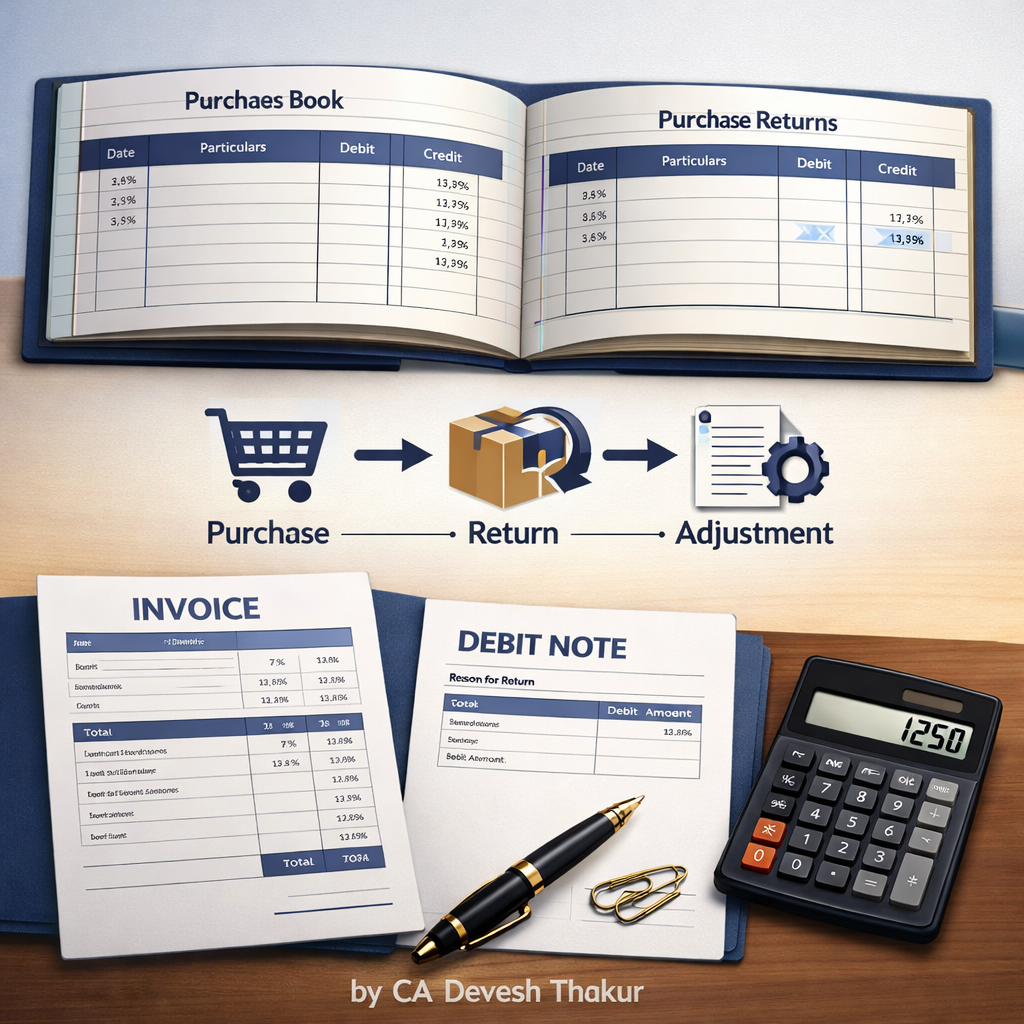
Day 23 – Purchase Book, Purchase Return & Debit Note
50 Days Accounting Challenge by CA Devesh Thakur
Accounting sirf journal entries ya theory ka subject nahi hai — yeh business transactions ko systematically record karne ka science hai.
Day 23 me hum cover karenge:
- Purchase Book (Purchases Journal)
- Difference between Purchase Book & Purchase Account
- Purchase Return (Return Outward)
- Debit Note (Concept + Practical Use)
- Journal Entries with narration (December 2025 examples)
Ye topic Class 11 ke foundation ke liye bhi bahut important hai aur future GST & accounting understanding ke liye bhi.
1. Purchase Book (Purchases Journal)
Meaning (Hindi–English Mix)
Purchase Book ek subsidiary book hai jisme sirf credit purchase of goods record ki jaati hai.
✔ Goods ka matlab → resale ke liye kharide gaye items
✔ Credit purchase → payment baad me karni hai
❌ Cash purchase include nahi hoti
❌ Asset purchase (machine, furniture, computer) include nahi hota
👉 Simple words me:
“Jab hum udhaar par maal kharidte hain, uska record Purchase Book me hota hai.”
Format of Purchase Book
| Date | Supplier Name | Invoice No. | Details | Amount (₹) |
Illustration (December 2025)
5 December 2025 ko Sharma Traders se credit par goods kharide ₹40,000
| Date | Supplier Name | Invoice No. | Details | Amount |
| 05-12-25 | Sharma Traders | ST/145 | Goods purchased | 40,000 |
Journal Entry (Posted from Purchase Book)
Purchases A/c Dr. 40,000
To Sharma Traders A/c 40,000
Narration:
(Being goods purchased on credit from Sharma Traders)
2. Difference Between Purchase Book & Purchase Account
| Basis | Purchase Book | Purchase Account |
| Nature | Subsidiary Book | Ledger Account |
| Purpose | Day-to-day credit purchases | Total purchases summary |
| Entries | Individual supplier-wise | One total figure |
| Balance | No balance | Appears in Trial Balance |
| Relation | Source book | Final posting |
👉 Purchase Book se data jaakar Purchase Account me post hota hai
3. Purchase Return (Return Outward)
Meaning (Hindi–English Mix)
Jab buyer (hum) supplier ko goods wapas bhejte hain, use Purchase Return kehte hain.
Isse Return Outward bhi kaha jaata hai.
👉 Matlab:
“Maal pasand nahi aaya ya kharab tha, isliye supplier ko wapas bhej diya.”
Common Reasons for Purchase Return
- Goods damaged
- Quality not as per sample
- Wrong goods supplied
- Excess quantity delivered
Format – Purchase Return Book
| Date | Supplier Name | Debit Note No. | Details | Amount (₹) |
Illustration (December 2025)
10 December 2025 ko Sharma Traders ko ₹6,000 ke goods return kiye
| Date | Supplier Name | Debit Note No. | Details | Amount |
| 10-12-25 | Sharma Traders | DN/12 | Goods returned | 6,000 |
Journal Entry for Purchase Return
Sharma Traders A/c Dr. 6,000
To Purchase Return A/c 6,000
Narration:
(Being goods returned to Sharma Traders)
4. Debit Note – Concept & Practical Meaning
What is a Debit Note?
Debit Note ek document hai jo buyer supplier ko issue karta hai jab:
- Goods return kiye jaate hain
- Supplier ne extra charge kiya ho
- Quality defective ho
Simple language me:
“Supplier ko batana ki aapka bill itne amount se kam ho gaya hai.”
Who Issues Debit Note?
✔ Buyer issues Debit Note
✔ Seller issues Credit Note (opposite case)
Format – Debit Note (Simple)
Debit Note No: DN/12
Date: 10-12-2025
| Particulars | Amount (₹) |
| Goods returned | 6,000 |
Accounting Effect of Debit Note
- Supplier ka account debit hota hai
- Purchase Return account credit hota hai
- Liability reduce hoti hai
5. Combined Practical Summary (December 2025)
- Credit purchase recorded in Purchase Book
- Total posted to Purchase Account
- Goods returned recorded in Purchase Return Book
- Debit Note issued to supplier
- Journal entries passed with narration
👉 Ye hi real business accounting flow hai.
6. One-Line Exam Ready Points
- Purchase Book records credit purchases of goods only
- Purchase Account shows total purchases
- Purchase Return means goods returned to supplier
- Debit Note is issued by buyer
Final Words – CA Devesh Thakur
Ye topic sirf exam ke liye nahi, balki real business, GST returns, and ledger management ke liye bhi foundation hai.
Agar ye concept strong ho gaya, to accounting aasan ho jaati hai.